

How to Survive a Crusade
The Sacred History of Scapegoats and the Moral Imperative to Dance on Bars Sometimes (Before Tipping Very, Very Well)

I had a panic attack last week. I’ve been plagued by them for years, and as the causes for panic seem to have increased, the plague of adrenal misbehavior seems to have become contagious. For those of you just joining us, I hope it is a temporary condition. Nevertheless, welcome to the club.
Also please leave. We have social anxiety.
I think a lot of people see panic attacks as an outsized reaction to an identifiable source of fear, but in my experience that gives the amygdala too much credit. More often than not, a panic attack is less like a wound than a zit. Annoying, opaque in origin, and famously ill-timed. Sometimes I can trace the screwy logic of my surging adrenaline to a source, but generally I don’t get panic attacks during emergencies. I get them during The Devil Wears Prada 2. Which I really wanted to see.

More of you reading this right now know what I’m talking about than you would have ten years ago. Panic disorders are on the rise. As are, it turns out, reasons for panic. I am known, where I am known, as someone who does my best to right-size anxiety by meeting panic with accurate information and actionable strategies. But I wanted to take a moment today to acknowledge that the stakes right now are high enough to fairly easily track the logic of an active amygdala. There are pockets of human beings for whom this is an abnormally, and very rationally, panic-inducing time.
I think I’m also maybe not the only person who has found themselves in recent years needing to know the plural of apocalypse. I start every morning with a damage report that is less Captain’s Log and more Washington Post. In just the last few months, the current administration has done a number of loud things and a number more quiet ones. Here are three recent and particularly concerning ones from that latter category:
In February, the Bureau of Prisons issued guidance instructing federal facilities to withdraw gender-affirming care and items for trans inmates (now enjoined thanks to the Transgender Law Center and ACLU).
The Department of Justice, Texas Attorney General, and Texas Children’s Hospital reached a settlement to turn their gender-affirming care clinic into a “detransition” clinic, exclusively providing support to the relatively small number of people who choose to reverse their medical transition (a legitimate kind of care already provided by many gender specialists).
Also in Texas, the DOJ has begun using court mechanisms to subpoena patient lists and health records from hospitals a dozen states away, in New York and Rhode Island. It’s a move that involves some considerable stretching of the law, and comes after many failures by the administration to subpoena patient lists at other clinics. Notably, thanks in large part to attorneys at GLADLaw and the National Center for LGBTQ Rights, nearly all have been struck down by judges in scathing opinions accusing government attorneys of misconduct.
It feels important to talk about these three in particular because, where they are being covered, they are at times being covered in connection with a very scary and very charged word.
That word is genocide.
I want to be clear that genocide is not where transgender Americans are at right now. We aren't going to wake up tomorrow morning to find ourselves objects of the kind of horrific, relentless atrocities being committed en masse in Gaza, Sudan, and Myanmar. Scholars much smarter than me who have spent their lives studying genocide tell us that's not how this history works. But I also won’t say having some anxiety around moves like these is a complete overreaction.
State-sponsored or -coerced conversion from a disfavored class into a favored one can, in some cases, be understood as a step along the way to a handful of worst case scenarios. Forcibly removing health care, forcibly converting gender-affirming clinics to detransition clinics, and attempting to force the identification of trans Americans and their private medical history are all steps that have raised red flags for experts in the history of genocide. In March, the Lemkin Institute for Genocide Prevention and Human Security issued its third Red Flag Alert for transgender people in the United States, citing forced or coerced conversion, eradication of identity, and prevention of communal identity development as marks of Number 9 in its Ten Patterns of Genocide. Scholars locate actions like this somewhere between Classification and Discrimination - Steps 1 and 3, respectively, of the Ten Stages of Genocide developed by Dr. Gregory H. Stanton. So, yes, this is a moment to pay attention to the path we are walking, and the ways it resembles a path too many have marched.
Let me again be clear. I do not think transgender people will wake up tomorrow to find ourselves the subjects of a state-perpetrated campaign of mass execution. But I do think we are being used as tools in service of an end that endangers many lives, is particularly dangerous to our own, and isn’t disconnected from the parts of human history that show our species capable of great atrocities, genocide included.
What’s true any way you cut it is that trans people are being vilified for many social ills that have little to do with us, and there is a relationship between what is happening to discrete and identifiable groups now and what has happened to discrete and identifiable groups before.
So today I want to be real that things are bad. If you’re not transgender, I think it’s important you know how bad. If you are transgender, feel free to conserve your adrenaline and skip to the considerably more fun sections in the second half on sacred scapegoats and dancing on bars. No matter who you are, I promise you will leave this article with at least some feelings that are not panic - because what I really want to talk about is the evidence-based, historically-supported, stubbornly-scrappy human knack for surviving the things worth panicking about.
The Modern Scapegoating of Transgender People
It’s not news that, in recent years, transgender people have been some of the favorite scapegoats of the conservative political platform. The scapegoating of transgender people is not new, but the iteration in which we currently find ourselves is particularly acute. The reason it is particularly acute goes back a very long time. But for the moment let’s start with ten years.
You knew you weren’t going to get out of this without a history lesson.
A not very long time ago, in a galaxy not very far away, we won marriage equality. And, shockingly, we did not live happily ever after.
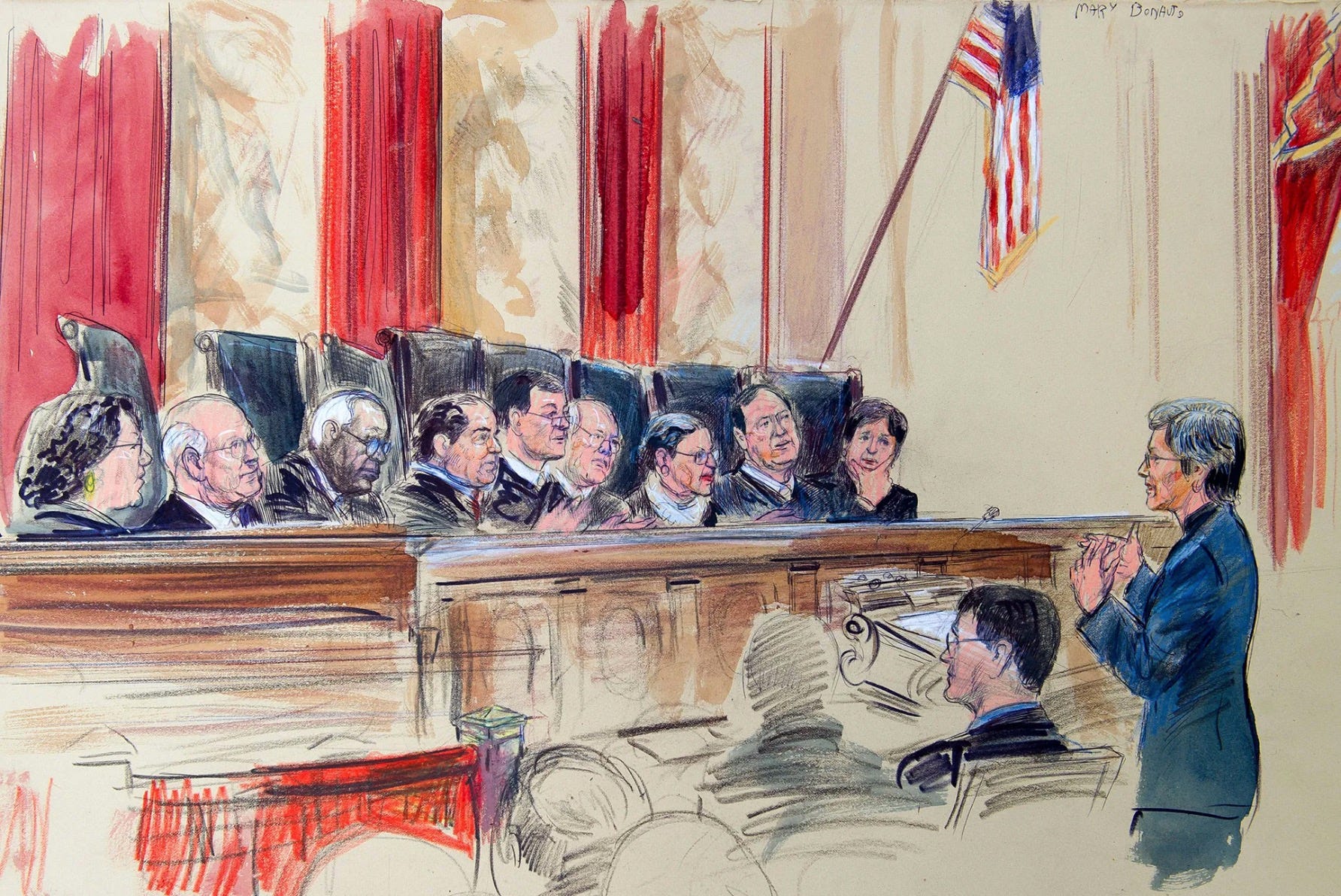
In 2015, the Supreme Court decided a case called Obergefell v. Hodges, holding that the Constitution guarantees a fundamental right to marry. What followed was many good things, and a few really bad things.
After the decision, conservatives lost a powerful electoral tool. They’d figured out all the way back in the 1970s, during Anita Bryant’s crusade to fire gay teachers, that LGBTQI issues were very useful during election years. Those issues were great for getting rank and file conservative voters to the polls. When political strategists on the right lost same-sex marriage as one of their primary issues, they needed a replacement. So they got a whole bunch of conservative think tanks into a room to figure out what the next thing was going to be. Then, they “threw everything at the wall.” And what stuck was us.
Fast forward seven years, during which those think tanks used a handful of states as laboratories for policies targeting trans people in public accommodations, healthcare, education, book bans, and even relitigating marriage equality. It’s now 2024. Dobbs v. Jackson Women’s Health Organization, the 2022 decision to overturn Roe v. Wade is deeply unpopular. For Democrats gearing up for the election, it has proven a highly effective mobilizer. Flailing for a rebuttal or at least a redirection, conservative strategists launch a $222 million messaging campaign promoting anti-trans narratives in a dozen swing states, directed at moderates feeling a little uneasy about losing the right to choose. They reframe the threat to women from state control of their bodily autonomy into a threat to women from an external source - transgender people. It works.
Unfortunately, Trans People Make Great Scapegoats for Authoritarians
Here’s what we know - and by we I mean the historians, sociologists, and political scholars much smarter than me who have spent years building the tools that we end up needing in moments like this: Scapegoating does not occur in isolation. When you mix it in with politicizing independent institutions, spreading disinformation, aggrandizing executive power, quashing dissent, corrupting elections, and stoking violence, scapegoating is a critical step of the authoritarian playbook. No really, this is a literal thing. And that playbook’s use of LGBTQI people as its tool has been very usefully distilled into human English by the folks at Protect Democracy and Over Zero, a global organization working in the field of “atrocity prevention.”
Sobering to know the field of atrocity prevention exists.
They provide a useful definition of scapegoating, not in a vacuum but specifically within the context of rising authoritarianism:
Scapegoating is a tactic that names a societal problem, real or imagined, and blames a group for that problem. However, beyond a single malicious accusation, the ‘problem’ blamed on a scapegoat is often every problem in the society, or modernity itself… [R]estorative nostalgia’... [then] provides a narrative to focus all the discomfort people feel about a quickly changing society onto a single enemy. The ‘us vs. them’ frame is a psychological tool that manipulates collective anxiety, anger, and fear to create a permission structure for previously unthinkable goals….” [emphasis added]
Or, in layman’s terms, Make It Great Again.
These scholars have found that this form of scapegoating that relies on a mythologized threat to the strength of a historically great nation is particularly salient when it can draw on three things: sexual anxieties, the protection of women and children, and support from religious institutions.
For political extremists with an eye toward scapegoats as a useful tool, trans people check an awful lot of those boxes.
We show up as the scapegoats for economic anxiety in wildly exaggerated claims about the amount of government funding that goes to gender-affirming care.
We show up as the scapegoats for mistrust of medical authorities when politicians muddy the waters of expertise by misrepresenting the evidence, overstating the risks of transition and manipulating regret rates.
We show up - in a particularly twisted move for a community with great vulnerability to abuse - as the scapegoats for a broken child welfare system in pernicious references to “groomers,” dating back to a long and ugly history of depicting LGBTQ people as pedophiles.
We show up as the scapegoats for persistent gender inequities when politicians who regularly vote against funding for women’s health and education redirect the resulting anger toward bills attacking single-digit handful of trans women and girls who play sports. That kind of rhetoric has been particularly successful at driving a wedge into feminist movements - an intentional tactic to weaken their influence by manipulating arguments that “the real war on women” is “the transgender phenomenon” - and “focus[ing] on gender identity to divide and conquer.”
Part of the reason it’s a scary time to be trans in America is that rhetoric like that leads pretty predictably to violence.
In 2023, a report of anti-LGBTQ hate incidents by the Anti-Defamation League and GLAAD found that, of 356 violent incidents against queer people in the previous year, nearly half were connected to political extremist groups. More than half of those were connected to the “grooming” conspiracy theory. Armed extremist groups like the Proud Boys have targeted pride parades and drag events for violence, claiming the mantle of protecting children. Online agitators have added gasoline to that fire - one notorious account alone has used myths about gender affirming care and drag shows to incite bomb threats and violence against at least 30 entities, including hospitals and individual doctors. Those things don’t take place in isolation. The President of the United States has spent time with the leaders of both those groups at Mar-a-Lago.

The United States is not the only place this coordinated campaign is taking place. For decades, those same U.S. groups have been exporting much of this rhetoric and policy across the world, to great success. In Russia, President Vladimir Putin pushed laws banning LGBTQ people from media, followed by a threefold increase in violence against them. In Indonesia, a ban on TV and radio programs that portrayed “effeminate men” was followed by raids on transgender beauty salons and the forcible shaving of trans women’s hair by state-sanctioned mobs. In Hungary, (recently-ousted) Prime Minister Victor Orbán paired demonization of minorities like the Roma people and transgender people to bolster his rise to power, something we see echoed in the current U.S. administration’s twin vilification of trans people and immigrants.
As in America, this rhetoric shows up in particular around - you guessed it - election years. In the days leading up to the 2018 election in Brazil, former President Jair Bolsonaro railed against “gender ideology” and accused teachers of “indoctrinating” students into “early sexualization.” After these comments, videos started circulating of sports fans chanting “Bolsonaro will kill queers,” and in 3 separate incidents, trans women were stabbed to death by mobs shouting his name. A year later, during the 2019 elections in Poland, President Andrzej Duda stirred up panic by repeatedly using the phrase “rainbow plague,” declaring in one of the most talked-about moments of the campaign that LGBTQ people were “trying to convince us that they are people.” (See #4 in the Ten Stages of Genocide.) That same year, hate crimes against the Polish LGBTQ community doubled.
The reason I think it’s important to underscore the severity of this moment for queer and trans people goes well beyond queer and trans people. While fear is human, the object of fear is manipulable. Xenophobia and prejudice are the cracks in democracy through which authoritarianism seeps in. The scapegoating of transgender people is not just a symptom of a larger trend toward authoritarianism; it is a tool to deepen the crack.
I say this because the laws making LGBTQI identity punishable by death in Uganda were written by the same pens as the laws spreading across America - and they are homegrown.
None of This Is New
It’s so familiar a playbook as to feel trite, if it didn’t feel so terrifying.
When I’m feeling overwhelmed these days, I try to zoom out. I zoom out on not just the history of this movement or even this country, but the history of human civilization. The violent exertion of power is a thing that has, for a long time, been true about our species. It is predictably and violently exacerbated by the dimensions of that power - by white supremacy, by wealth distribution, by the history of western colonization and imperialism. But what helps me is to remember that we are not the first to see what we are seeing right now.
This is not the first strongman we have seen, nor the first scapegoat. We frequently recall Nazi Germany and the demonization of Jews - a horrifically extreme example of something too familiar. In 1990s Rwanda, it was the Tutsi minority blamed for divisions in the nation. In Pol Pot’s Cambodia, it was urban elites and immigrants blamed for economic anxiety. A hundred years ago here at home it was Black Americans blamed for falling cotton prices and Indigenous Americans blamed for bloodshed born of self-defense, both narrowly preceding widespread extrajudicial killings. A thousand years ago, it was Pope Urban II’s characterization of Muslims and pagans as not human that led to the literal Crusades. Are these sounding familiar.
Former Finance Minister of El Salvador Manuel Hinds has laid out the path that follows scapegoating, a path we have now seen enough times to recognize: identify a minority population, connect social problems to them, grow resentment into hatred, use that hatred to form a political majority. Then, in his words, “let loose the hatred of the majority against the minority and use[] the blood of the latter as a cementing social bond.”
The South will rise again. Jews will not replace us. Kill transgenders.
Four months before the 2024 election, Donald Trump gave a speech at the North Carolina Republican Party convention. He promised on day one to sign an executive order cutting federal funding to any school pushing “transgender insanity.” What followed was wild, raucous applause. In the recording, it’s hard not to hear him take note of its intensity. He goes on to say, “It’s amazing how strongly people feel about that. I’m talking about cutting taxes, people go like that: [claps politely]. I talk about transgender, everyone goes crazy. Who would have thought? Five years ago, you didn’t know what the hell it was.”
I’m going to draw some wisdom here from an unlikely source, which is my favorite thing to do because if we look hard enough there is good theology everywhere. Today, it’s from the 2012 sacred text The Avengers. In this scene, our favorite morally ambiguous antihero Loki is solidly in his villain era. He has just acquired a means of enforcing enormous if not absolute power, and he tells the crowd before him to kneel. They do. He monologues for a bit about the nature of human subjugation and the propensity to submit and, when he is done, an old man slowly rises to his feet. In a thick German accent, he says “Not to men like you.” Loki retorts, with trademark cockiness, “There are no men like me.” The old man replies, “There are always men like you.”

Let me be clear: I believe that we will win.
I also believe we will lose again. And then we will win again. And then we will lose again. This is the course of human history.
There will always be men like him.
If we look only at the one in front of us, we will forget the lessons of those who have done this before. We will forget that we are fighting not only against this avatar of authoritarianism, but so those who fight the next can learn a slightly easier way what we are learning the hard way. If we look only at the one in front of us, we will give way to despair.
The Sacred Scapegoat
Welcome back, trans people! I’m glad you decided to preserve your adrenaline. You deserve a burrito.
I was recently asked to speak to a group of progressive religious leaders about what lessons we scapegoats du jour have for those trying to weather the cycle of panic and exhaustion that is the hallmark of authoritarianism.
They can’t ever just ask me to talk about Shark Week.
Without bumping up against the stubbornly-popular theological malpractice of claiming there is redemption in suffering, it actually is useful to acknowledge there is a theological frame here. Alongside the horrific history of scapegoats, it’s worth talking about the holy one - their inextricable historic connection to religion, what it’s like to be one of them right now, and what we can learn from the ancestors, elders, and advocates who have been here before.
For that, we need to zoom out farther than a few decades or even a few centuries. After all this, after fear and violence and feeling our spirits be burned as fuel for a rapidly-growing authoritarian machine, you might be surprised when I say there is something sacred about this unshakeable human propensity for scapegoating. But, just or not, a scapegoat originally was considered something sacred.
While there are similar rituals dating back to probably around 2400 BC, the first written record we have of the word scapegoat is from a translation of my very least favorite book of the Bible. Bet you can guess.
But this may be my favorite part of my least favorite book.
In the era of the Temple in Jerusalem, there was a ritual practiced each year during Yom Kippur, the most holy time of atonement in Jewish tradition. The ritual goes like this: There are two goats. One is for the Lord and one for “Azazel.” One is slaughtered at the door of the sanctuary as a sacrifice to God, as part of the general Yom Kippur ritual. The other is given a pretty red ribbon.

Seems pretty unfair so far.
But later in the day, the High Priest takes the remaining goat, lays his hands over its head, and confesses over it all the iniquities and transgressions the community has committed the past year, transferring the sins of an entire nation into a single vessel. He then leads it by a rope to a place far from the temple and sets it free in barren wilderness. In leaving it behind, he leaves behind the sins of the community so that they might enter a new year free of sin.
Now, the word “scapegoat” isn’t in that story. It first appears in the 16th century, in controversial Christian scholar William Tyndale’s very first translation of the Bible directly from Hebrew to English, to describe the goat that “escaped” into the wilderness. But that’s not entirely right. The word he ran into here was Azazel, which doesn’t have an easy translation in English. There are a few schools of thought on the best interpretation, but the simplest is this: ez means goat, azal means away. Better than escape goat, the word is more accurately translated as, in the Greek Old Testament, “the sender away of sins,” or some Early English translations, “the goat that departs.” It does not escape; it is released.
In other words, the scapegoat is best described as the one who is called to carry the sins of the community so they no longer have to bear the weight themselves.
The scapegoat does not sin. Quite the opposite. Taking on the sins of others so that they might be forgiven was a sacred duty. It was a duty so sacred that early Christian scholars sometimes turned this story into a prophesy predicting the coming of Jesus whose sacred duty it was in the story to carry the sins of the community to the cross - and who, like the goat, was cloaked in red cloth.
We see similar rituals all around this region around this time. In Greece, during severe hardship like famine or plague, the scapegoat was required to be a person, preferably one of some importance. But important people, historically speaking, don’t tend to be the first volunteers for human sacrifice. So a workaround was developed. A poor person could bring great honor to themselves and their family by volunteering to be the scapegoat, and up until their death were celebrated and feasted to. It’s hardly the only time we see the poor pay the price for the sins of the powerful. But it was, even then, a sacred act of service and sacrifice.
The scapegoat was never intended to be someone we blamed for sin; it was someone we asked to carry our own. It was the calling of the scapegoat to bear the moral debt of the culture that made it - our collective anxieties, our mistrust, our panic, our prejudice, our fear of difference - and carry them away, into the wilderness, far from sight. No harm, no foul. Well, except to the goat.
I’m not here to suggest that we shouldn’t fight with everything we have to shield the scapegoat, who, today, does not wander the wilderness so much as run for its life from the very people whose sins it has borne. It’s unfair. It’s unjust. It is our duty to develop a means of accountability that does not sacrifice an innocent. But. And. Somewhere in the middle of that wilderness, even now, there is something sacred.
How do you survive a crusade?
You remember that you are something sacred.
How the Absolute Hell Do We Do That
The man behind at least one of the three actions we started this piece with - this month’s settlement creating the so-called “detransition clinic” - was Texas Attorney General Ken Paxton. This is a politician with a list of offices nearly as long as his list of scandals, and a tendency to use trans youth to distract from those scandals during election years. Coincidentally, he is currently running for U.S. Senate.
In 2022, a week before his reelection primary for state Attorney General, he announced a nonbinding state policy declaring parents who support their trans kids guilty of child abuse. Governor Greg Abbott immediately directed the Department of Family and Protective Services (DFPS) to begin investigations into whether children should be separated from their parents. Pretty soon, I was walking into the Texas Capitol with more than 80 other people - friends, teammates, doctors, scientists, ministers, advocates likely and unlikely - to testify about the harm it would do.
There are two things about that day I will never forget.
First, I will remember the people who didn’t testify. Instead, one by one, a volunteer would approach the podium and open with the same words: “I’m here representing a family too terrified to be in this room.” They would then read a letter written by someone who couldn’t speak for themselves without risking the possibility that they would leave the building without their child.
Second, I’ll remember the bar afterward. Exhausted and ravenous after hours of testimony, dozens of transgender advocates and allies piled into a poor unsuspecting hotel restaurant as we are sometimes wont to do. After 20 minutes or so of french fries, all our phones started buzzing at the same time. Lawyers for PFLAG had secured an injunction on the policy – a temporary pause while a case makes its way through the courts.
Someone cheered. Someone else bought champagne and sparkling cider. It was a happy messy blur. We danced (even those of us who kind of hate dancing) and we passed around beverages and we raised our glasses.
But we didn’t toast to winning. We don’t get a lot of wins. A few years ago it had already been a few hard years, and we knew too well that wins are often temporary. We knew this injunction would be appealed, and we knew it could be lifted as quickly as it had been secured. We knew it could be 20 minutes before a higher court struck it down. So we didn’t toast to winning. We toasted to the next 20 minutes.
And then, possibly to the chagrin of the bartenders, we made a dance floor. Emma Goldman famously said (in an only-maybe-apocryphal quote), “If I can’t dance, I don’t want to be part of your revolution.” So we danced the revolution. We danced between screeching tables, we danced in the rainstorm that descended on the restaurant patio, someone even danced on the bar.
We tipped the staff handsomely, I promise.
That injunction and its progeny held strong for four years. (It was lifted last month when the court rendered it moot, because DFPS has now closed the investigations.)
We will not be the first scapegoats to survive, and we will not be the last. Drawing on the wisdom of the Black elders and ancestors who are still here after generations of death-dealing U.S. policy, Dr. Cornel West calls the impulse to dance in the face of horror “revolutionary joy.” By chance, I was there the day he gave the speech that quote comes from, because it was at my own graduation. He told us, starry eyed but already weary from the first Trump presidency, “the spirit [will] not descend without song—that the music that you heard, the poetry that soaked your soul, it is in no way ornamental. It is in no way decorative.” Joy is work. Creation is work.
In the communities that survive, we see the critical importance of that work echoed over and over.
I was recently at a convening of international human rights advocates - which, like three of the other LGBTQI convenings I’ve been to this year, had to be held in secret until attendees had left the site. A colleague working in Palestine shared the story of talking with a friend who lives in Gaza about how he was wrestling with the utility of hope in a world where tens of thousands of children are being killed by bombing and starvation. “In Gaza,” his friend replied, “there is nothing but hope.”
Elie Wiesel once described trading a man a piece of rare bread for materials to make a makeshift menorah, and the shock of discovering that he would give up food to celebrate Hanukkah in, of all places, Auschwitz. The man replied, “Especially in Auschwitz.”
In Pleasure Activism, adrienne marie brown and Dallas Goldtooth describe the historic power of humor for surviving the genocide of 15 million Indigenous Americans as, literally, “the power to make light.” It’s no coincidence that his words echo Joy Harjo, the first Native American to hold the title of Poet Laureate (and his momentary co-star in a Reservation Dogs). “[W]hen we laugh,” she says, “we are indestructible.”
On a good day, a whole half of advocacy is grief. These are not good days. In days like these, survival looks like stubborn, dirt-caked joy. It looks like surviving not only in body but in spirit. It looks like fighting for your life without losing your soul.
We celebrate 20 minutes at a time because we survive 20 minutes at a time, and our survival is the revolution.
We Dance
I’ll tell you a secret. We like to say there’s no gay agenda, but anyone who has been to a convening of queer advocates knows that’s not totally true. The gay agenda is written at the hotel bar - whether it’s over champagne or sparkling cider.
Thich Nhat Hahn says those who do justice work need to balance the same number of hours they spend advocating and caretaking with equal ones healing and nourishing. “Touching suffering is our practice,” he says. But the only way to remain equipped to lessen that suffering is to be in touch with joy: “the sky, the birds, the trees, the flowers, children… You have to enjoy walking meditation. You have to enjoy your tea. You have to enjoy the company of happy people… [Y]ou need to get the right nourishment every day.”
Every day.
I read the three news stories we began this article with, and that feels impossible. They are trying to create a world without us. We have seen what happens when people with power try to create those worlds. We have read the damn poem. Moments like this are what panic is for. Surely even Thich Nhat Hahn would make an exception.
And then I remember the hotel bar.
One of my favorite quotes from queer history comes from a complicated source, but Dan Savage did, in fact, nail it. “During the darkest days of the AIDS crisis we buried our friends in the morning, we protested in the afternoon, and we danced all night, and it was the dance that kept us in the fight because it was the dance we were fighting for.”
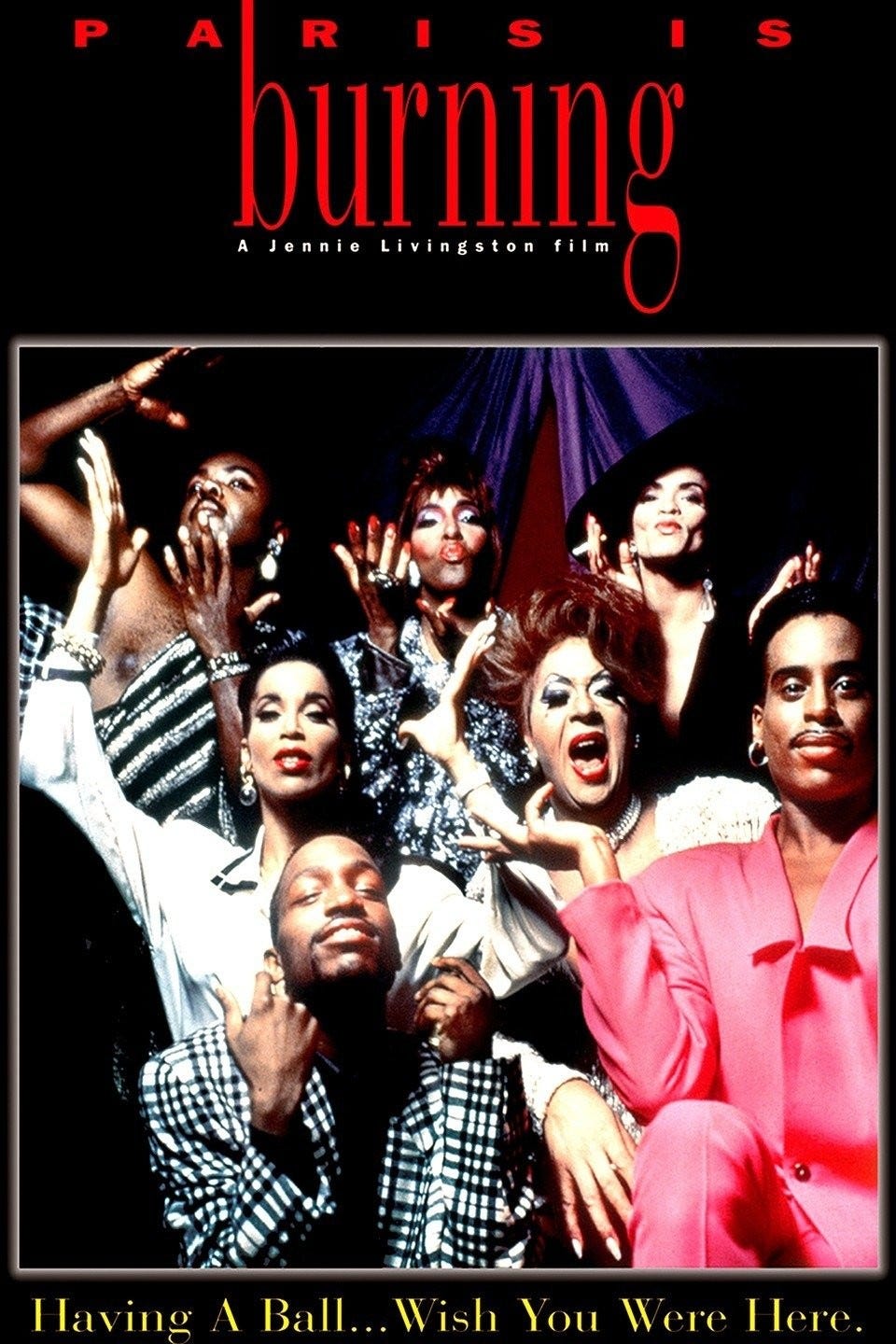
Yes, the work of survival is calling your representatives, and submitting public comments, and supporting mutual aid funds, and buying trans people burritos. But the work is also breaking bread, making new traditions in cheap hotel rooms, going dancing. There is a reason that, of all the sacred rituals shared across cultures for millennia, one of the most powerful and enduring, particularly among those on the receiving end of power, is shaking that ass.
I am not here to tell you the way to survive is to learn to enjoy the devastation. I am not here to tell you the way to survive is not to do the work. I am assuming, I hope rightly, that you are here because you are trying to mitigate the devastation and understand you have to do the work (especially the cis people still reading).
What I’m here to tell you is that the way trans people have survived this work – the way we have survived being scapegoated, targeted, attacked, and professionally harassed by the most powerful people in the world and repurposed as a tool on their rise to authoritarianism – is the latest incarnation of the way our spiritual ancestors have survived generations of human cruelty. We start the morning with a damage report and end the night with a toast to the next 20 minutes.
That toast is not light work. It is the work of being a scapegoat. It is a sacred ritual. It is what enables us to carry the weight of an entire nation’s iniquity, a nation that has confused its sins with our sacrifice and laid the blame for the blood it drains upon our own beaten bodies. It’s unfair that any community is asked to carry this, it’s unfair that we are the most recent in a long history of communities asked to carry this. It is not the work of any God or god I believe in. But it is something sacred, because we are something sacred.
If there’s something our ancestors and elders and those who have done this before have to teach us about how a scapegoat survives, how we weather a crusade against our very right to exist, it’s this:
Go to the bar.
Toast to the next 20 minutes. Dance until morning (even if you kind of hate dancing). Wear something red.
Because you are something sacred.

Thank you, dear one. I kept looking for a great few sentences to quote in a repost, but I can’t limit it to just a few lines. I needed this Sam sermon today.
Sound analysis and mostly in harmony with my own book length treatment of these issues. In case your readers are interested; The Politicization of Trans Identity: An Analysis of Backlash, Scapegoating, and Dog-Whistling from Obergefell to Bostock: Loren Cannon: Lexington Books - Bloomsbury https://share.google/c0wytbByCeB3Bxc5i