

Make Them Look You in the Eye
Public Comments, Polite Smiles, and an Actually Pretty Interesting Bureaucratic Lever You Can Pull for Trans Youth Right the Heck Now

I want to talk about the sexiest thing in LGBTQI+ civil rights right now: federal administrative rulemaking. I know. Hotter than Heated Rivalry.
In two weeks, on February 17 and 20, the comment period on three proposed anti-trans rules with nationwide reach will close. If that’s all the convincing you need, skip to the Public Comment section at the end.
If not, I want to talk a little about how critical it is that every one of us takes literally 5 minutes to submit a comment on one of the three proposed federal actions trying to intimidate healthcare institutions into limiting gender-affirming care - especially after two medical associations indicated this week they are beginning to buckle under the immense pressure to do so. I also want to talk about why agencies under the current Trump administration have been so eager to accelerate or skip these comment periods across the government, and how clear it is they consider these bureaucratic hurdles far from boring - perhaps outright powerful.
But first, I want to talk about ugly architecture.
The Lyndon B. Johnson Building
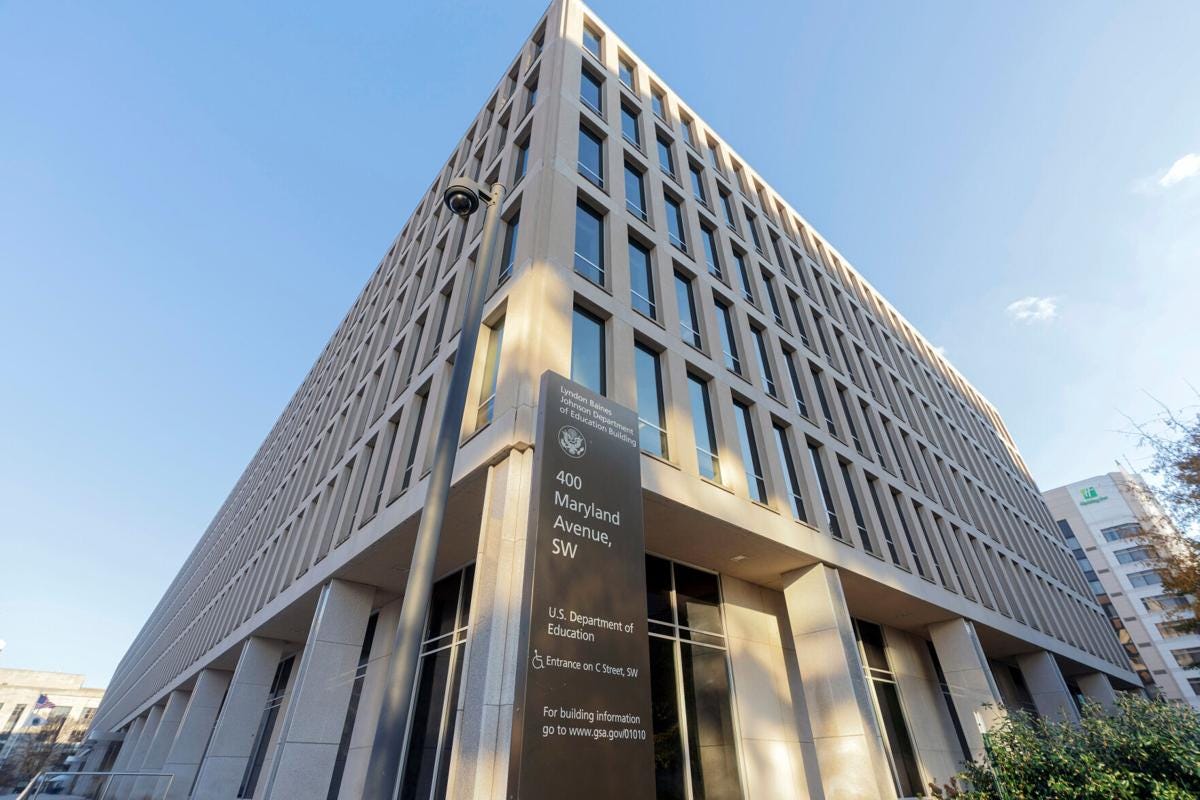
A few months ago, I had the honor of giving the keynote address at an event held by the National Trans Bar Association honoring eleven trans attorneys about to become the newest members of the Supreme Court Bar. It’s a hard moment to be celebrating anything related to the Court. It’s going to be a hard term in more ways than one, I think. But, as of the next morning, eleven more trans people had access to one of the rooms where hard moments happen. And historic ones. I’ve had the privilege and the anxiety of being in more than my fair share of these rooms, and they aren’t always comfortable. They weren’t built for us. Some were fairly explicitly built to keep us out.
During the Biden-Harris Administration, I had the honor of serving as Chief of Staff in the Department of Education Office for Civil Rights. I went to work every day in what is now called the Lyndon B. Johnson building – constructed in 1959, at the peak of the Lavender Scare, a period following McCarthyism when somewhere between 7,000-10,000 federal employees suspected of being queer were purged from government jobs. That hits especially hard as I write this from Washington DC, at a time when, again, thousands of federal employees are being pushed out of public service as part of an agenda of exclusion.
The LBJ Building was one of the first in a rapid succession of federal offices constructed in the modernist style of - I kid you not - Brutalism. Brutalism’s raw concrete exteriors are famously divisive here in the nation’s capital. Adjectives frequently used to describe them include looming, monolithic, fortress-like, seemingly-impenetrable, and Orwellian. Just six years before the term was coined (as a joke) by Swedish architect Hans Asplund, a treatise was published on uncompromising American individualism as told through the eyes of a young architect who insists on cold functionality, hard geometric shapes, and raw materials. It was Ayn Rand’s The Fountainhead. Do with that what you will.
During the years I served in the LBJ building, to the best of my knowledge, I was the only openly trans person in it. It isn’t until you’re inside those spartan rooms that you really understand the kinds of power that live there, and the ones that don’t. The moments history will rightly see as victories, and the battles lost along the way. There were rooms where monumental, lifesaving work happened. There were rooms where unsung civil servants joined with sleep-deprived presidential appointees to do the vast majority of the good work in those buildings that doesn’t make headlines. There were rooms where we won arguments. There were rooms where we lost arguments.
Sometimes it is genuinely necessary to make hard choices that cause harm. Every day, we administer vaccines, tell painful truths to people we love, deny kids candy bars without which they know in their bones they will surely perish. Some choices, in life and in politics, can be distilled to pure good or evil. Most can’t. Sometimes we have to make hard choices, and sometimes people get hurt.
But there’s a difference between a bow hunter and a factory farmer. As a matter of integrity, I tend to believe that before taking a course of action that will cause a person harm, one should look that person in the eye. Certainly before a leader makes a decision that will impact a large group of people, they should look at least one of those people in the eye. And, sometimes, being in the room where hard choices are being made by people of integrity means the eye they look into is yours.
The toll of moral injury on government workers is a topic for another day. Today I’ll just say this: Being in the room doesn’t always prevent the harm. But making them look you in the eye first is not nothing.
The United States Supreme Court Building
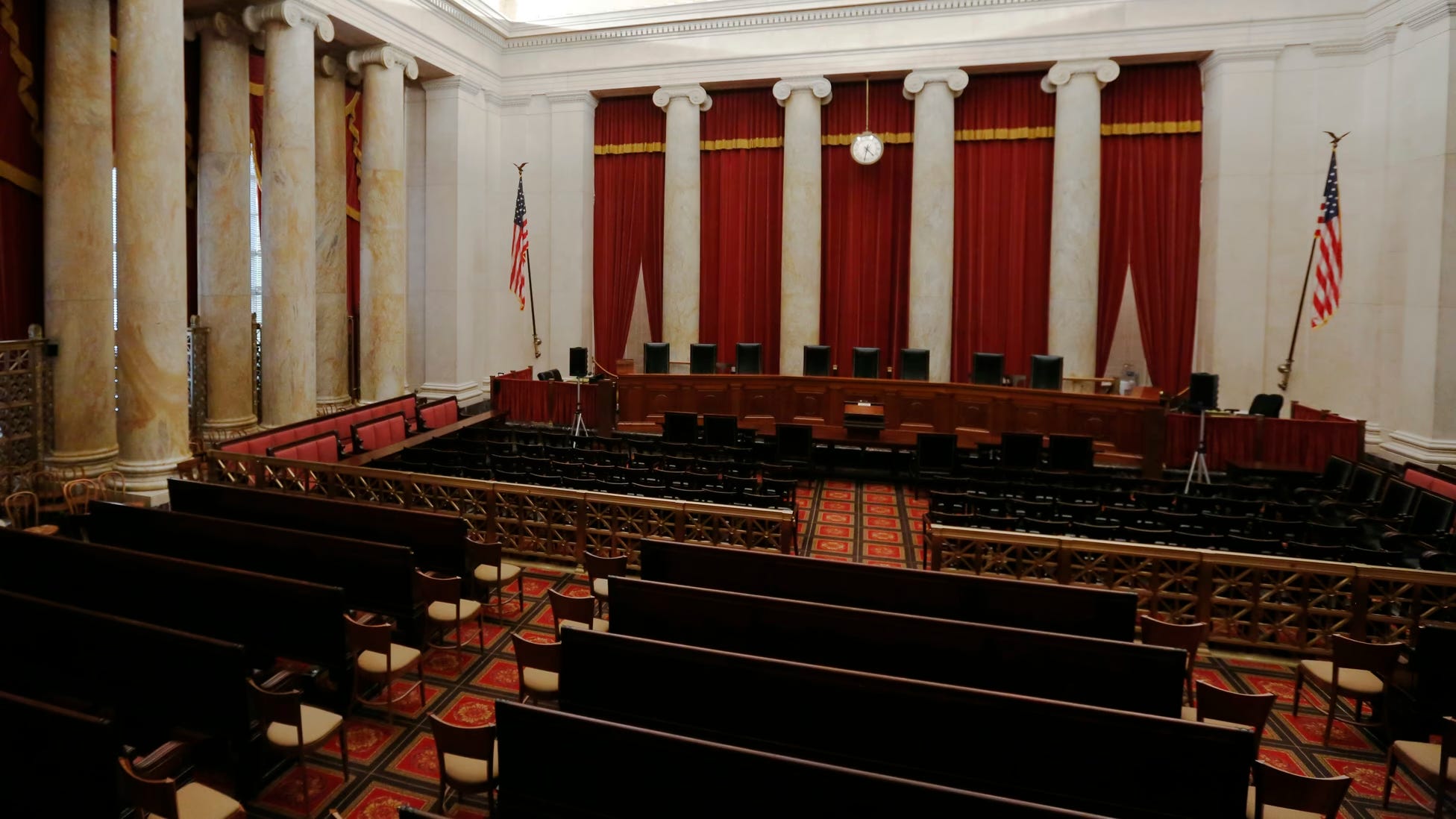
The U.S. Supreme Court Building and I share a birthday, give or take 54 years. I like to think I’m aging better, but we can touch base in half a century.
The cornerstone was laid October 13, 1932 by Chief Justice Charles Evan Hughes, the son of an immigrant who authored several historic decisions on civil rights, labor protections, and freedom of the press. Architect Cass Gilbert was tasked with designing a home for a Court that had been roving from building to building for 146 years, which matched the classical style of its coequal constitutional partners. And he did so, in grandeur if not in size. Gilbert didn’t like the looming nature of the other buildings on the National Mall. He designed the Supreme Court building to be smaller by contrast, and limited the dimensions of the Chamber itself in an effort to preserve the intimacy between the justices and those standing before them. The building came in, shockingly even in that day and age, under budget.
90 years later, the NTBA began gathering an annual cohort of trans lawyers to be sworn into the Supreme Court Bar, increasing by multiples of multiples the number of us admitted to argue before this historic institution. Most of us never will. Many of us aren’t even litigators. But, when there are so few trans attorneys that the number admitted to the highest court has likely only risen in the last few years from single to double digits, being in the room matters.
If you ever find yourself in the strange position of being sworn into the Supreme Court Bar, you’ll find there are actually a lot of rooms involved. Over the course of many hours, you are shuffled from a small pre-dawn line next to the marble steps, to a cramped stairwell with metal detectors, across enormous hallways of enormous portraits, to lockers with peeling paint filled with the cell phones of those already inside, through a series of even more hallways, to holding rooms with majestic chandeliers and fading carpets, down what is surely the same hallway three more times. When you are at last escorted into the Court Chamber, in all its grandeur, it’s almost a surprise it’s not another hallway.
I think it must be this moment Cass Gilbert had in mind when he designed the building. It’s a grandiose room, but it is still very much just a room. When they seat you to be admitted, you’re almost literally spitting distance from nine of the most powerful people on Earth. (You don’t have to take that as an invitation.)
The day I was sworn in, I’d hoped we’d be near Justice Jackson or Justice Kagan. So, obviously, we were seated directly in front of Justice Amy Coney Barrett. For no reason other than my last name happens to start with the letter A, I was called first. I remember the smile through actual tears Justice Jackson beamed from across the room when she realized what was happening. I also remember the smile on Justice Barrett’s face when she realized what was happening. And it was a smile. It wasn’t pride, it wasn’t even joy. If anything, it was polite. But, because I was standing right in front of her, it was me she smiled at. It was me she had to look in the eye. And then, one by one, it was eleven of my most brilliant colleagues.
Just one term prior, Chase Strangio had become the first trans person in history to argue a case in that room, in United States v. Skrmetti. He fought his heart out at the storied podium against steep odds, and did our whole community proud. And still, we lost. Though, legally speaking, it wasn’t the magnitude of loss it could have been, it was a significant and a painful one. In a landmark decision, the Court held that states have the constitutional right to ban gender-affirming care for youth.
Being in the room didn’t prevent the harm. But it’s not nothing that, before six justices ruled against trans people, they had to look a trans person in the eye.
The Herbert H. Humphrey Building

Three weeks after those trans attorneys were sworn in in December, Secretary of Health & Human Services Robert F. Kennedy Jr. stood before a group of reporters at HHS headquarters and announced the release of six anti-trans policies in a single day. He also did not announce a seventh - quietly terminating millions of dollars in grants to the trans-supportive American Academy of Pediatrics related to birth defects, early autism identification, rural healthcare access, adolescent health, and mental health - the issue for which I once served as a Senior Advisor at the agency.
I know the building he was standing in intimately because I used to dread going to it. I had the good luck to be stationed at the Parklawn Building up the road in Rockville, which is as comparatively lovely as it sounds. The Humphrey Building, on the other hand, is frequently called the ugliest building in capital. If the LBJ Building introduced Brutalism, the Humphrey Building perfected it. But it’s what’s on the inside that counts. HHS is consistently ranked in the top 3 federal agencies to work based on employee engagement and satisfaction (the top spot has been held for 13 years by NASA which, to be fair, I would work at for the astronaut ice cream alone). More importantly, when the Smithsonian interviewed current and former civil servants for their take on the famously ugly exterior, what they talked about instead was the beautiful things happening on the inside.
That day in December, before members of the press still allowed at Trump administration press conferences, Secretary Kennedy announced two proposed regulations to cut Medicaid and Children’s Health Insurance Program (CHIP) funding for low-income youth receiving gender-affirming care and for any hospital that provided it, a third proposed regulation excluding gender dysphoria from disability discrimination protections, a declaration that supportive providers don’t meet professional standards of care, a public health message vilifying and wildly overstating the side effects of puberty blockers, and twelve threatening letters from the FDA to manufacturers of chest binders.
If your eyes glazed over reading that last paragraph, don’t worry. I do this for a living and mine do too. That’s by design. They’re hoping we’ll be too overwhelmed to participate in what comes next.
But it’s important to remember that nothing they did that day changed the law. Not even the widest-reaching actions on that list - the three proposed regulations - are law. They aren’t even final rules. They are proposed regulations.
There it is again. I can feel your eyes glazing. But the difference between a proposed regulation and a final rule is actually evidence of a kind of incredible thing about our democracy. I can’t promise to make it as interesting as the cottage, but I will endeavor to make it more interesting than the New Yorker.*
*With apologies for these references to anyone who has incredibly not yet seen the Big Queer Hockey Show.
The Regulatory State
First, let’s talk about rules and regulations (don’t let agencies using these interchangeably confuse you - for most purposes they are the same thing). Regulations aren’t laws. The Constitution says only the Legislative Branch gets to make laws. The Executive Branch just gets to execute them. It’s, like, in the title. Regulations are simply guidance on how the Executive Branch executes the laws the Legislative Branch makes.
Read that once more. I promise it makes sense.
One thing that means is that the Executive Branch, of which the President is the head, cannot exercise so much discretion in executing the laws that it changes their substance. Every federal agency in the Executive Branch is still, critically, tied to the text Congress wrote. In this case, that federal agency is HHS, and those laws are Section 504 of the Rehabilitation Amendments of 1973 and a number of statutes providing funding for healthcare coverage and healthcare institutions.
Now let’s talk about proposed. For many good reasons, federal agencies can’t ordinarily enact regulations that involve any sort of significant change in how they execute a law without the public having a say. It’s a really, really important guardrail. And sometimes that means rulemaking takes a really, really long time, because of one very important part of that process: the public comment period. This is the thing the Trump administration has been very hard to speed up or get around all across the federal government. That’s what you do when the public isn’t with you.
When I was serving at the Department of Education, the Office for Civil Rights was in the process of writing a regulation on Title IX clarifying that (among several other noteworthy things) protections against sex discrimination in federally-funded schools include LGBTQI+ students. This was a famously long process. There was a lot of understandable frustration about just how long. But, even though we wanted as much as anyone to get the rule out, the reason it took so long was actually a very good one. After the public has had an opportunity to submit comments on a proposed change in the execution of a law, the agency is legally required to read every single one of those comments. The teams that read these comments are not large. Many are under 10 people, and that was before the purge of federal workers.
The proposed Title IX regulation received 235,000 comments.
The time between the proposed regulation and the final rule was nearly 2 years.
The Public Comment Infrastructure
With so much going, any single action can feel like a drop in the bucket. Frankly when it comes to the current federal government, it feels like more hole than bucket. It’s tempting to believe it doesn’t matter how many forms of legal and policy resistance we engage in when our leaders aren’t listening. And that may be true. But there are two reasons I’m going to ask you to write a comment anyway.
First, comments slow down the process. Right now, in many ways, the name of the game is delay. Every day that goes by brings us closer to the one these people are no longer in office, and no longer have the same power to do damage. Every day that goes by is a day a young trans person still has access to the healthcare that may well be saving their life. Any day we can give them, we give them.
Second, if and when these rules are enacted, they will immediately be challenged in court. Because of federal judicial rules I actually will not bore you with this time, the courts are limited in what they can consider as part of the case. They can’t look at anything outside the record. Rallies and think pieces, as important as they are, aren’t part of the record. But comments are. The comments we write today will be the tools our lawyers use tomorrow.
The three anti-trans rules proposed by the Trump administration are currently in their public comment period, and the windows are closing soon. Comments on the Medicaid and CHIP rules are due February 17. Comments on the Section 504 disability discrimination rule are due February 20. The latter deadline had to be extended due to an administrative issue, which is part of how we know the number of comments submitted is only 333. The number on the other two is around 2,000-3,000.
Again, the number of comments submitted on the proposed Title IX rule was 235,000. I know firsthand we can do better.
The Center for American Progress has put out a helpful guide to writing comments that goes a little more in depth. Submissions are anonymous, but not everyone feels safe interacting with the federal government right now. Don’t worry. There’s more than one way to engage this process. Fair Wisconsin is putting together comments collecting anonymous stories. You can submit your own by emailing testimony@fairwisconsin.com.
That said, don’t overthink it. Legal and medical organizations will be submitting long comments explaining the ways this violates all kinds of well-researched norms. You don’t have to do that. What’s more, the teams reading these comments have special software that groups comments together if they look too identical, so regurgitating any organization’s talking points can actually be counterproductive. What they need isn’t your policy expertise; it’s your story.
If you have 2 minutes, sign onto the ACLU petition to be submitted to the Centers for Medicare & Medicaid Services. This is the least impactful thing on this list, but it’s not nothing.
If you have 10 minutes, submit comments on why the two rules that cut funding for gender-affirming care and punish any hospital that provides it would be harmful to you or someone you love.
If you have 15 minutes, submit a comment on why the third rule that exempts trans people from disability discrimination protections undermines all discrimination protections.
If you’re more of a social butterfly than I am, register for the Advocates for Trans Equality Virtual Comment-a-Thon on Wednesday, February 9.
The Room Where It Happens
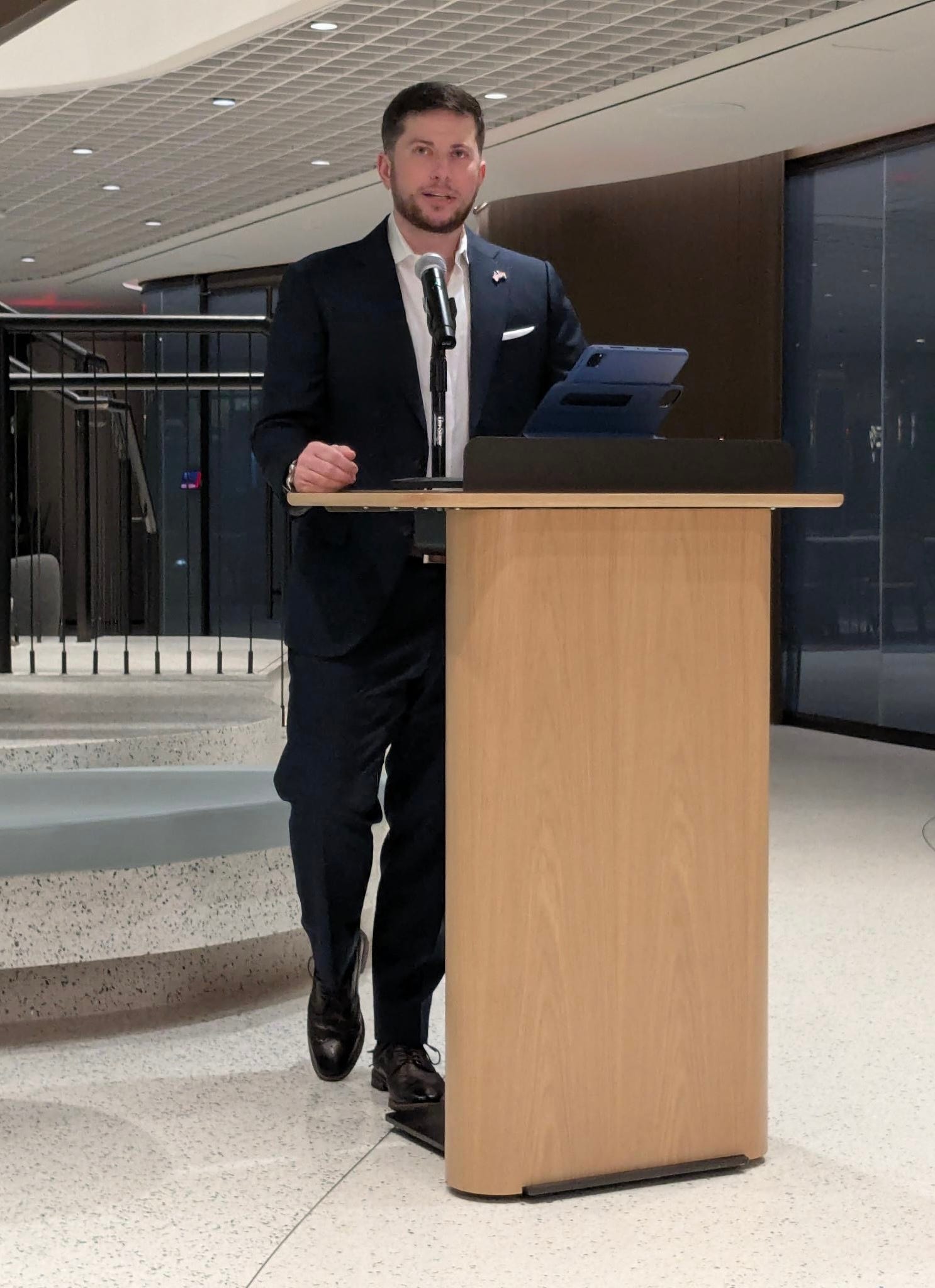
My point is this: Even if you can only write one thing, write one thing. That comment puts you in the conference room, the same way we put those eleven trans attorneys in the Courtroom Chamber. It ensures the people trying to write us out of existence cannot enact rules about laws meant to protect us without knowing the harm they will cause us. It deprives them of plausible deniability.
Submitting a comment allows you to represent the thousands who can’t be in that spartan room in that Brutalist building – trans people whose intersecting identities add padlocks and armed guards to the door, trans kids who have seen too few surviving elders to imagine a future where they survive these attacks, trans forbears who lived and died before moments like these were possible – who would be so proud to see you fighting for your life and the lives of the people you love. Our presence in these rooms, where so much has happened to us without us, reclaims a piece of our power. Power to impact the world outside of that room. And – even if it’s just for a moment – power inside it too.
Wherever you are, you can be a part of this process. Remember you are holding the hope of thousands. Remember your right to be here doesn’t come from anything they can touch. Remember the power in that room goes both ways. Put your existence in writing.
And make them look you in the eye.
Brilliant framing! The Brutalism metaphor for bureaucratic barriers that can stil be penetrated is spot on. What's underrated here is how comment periods function as dual-purpose resistance, both slowing implementation and building the legal record for future challenges. I've seen this dynamic play out in local policy fights where sheer volume shifted the calculus even when we lost the immediate battle.
. . . doom scrolling, and I obviously was meant to see this . . . As a retired federal employee whose job included working with the public comment process, I vouch for the importance of public input in decision making as Mr. Ames stated here. Even if the final decision goes against the desired outcome, comments submitted can become grist for the mill in future actions . . .